One Big Takeaway from Total Rewards '26: Your Recognition Program Isn't Broken. It Was Designed Wrong.

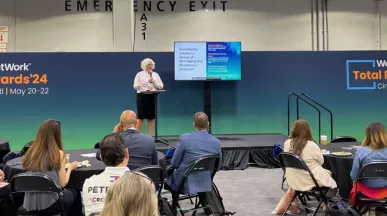
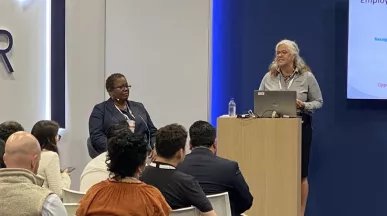
Inspirus recently attended Total Rewards '26 in San Antonio. The conference featured strong sessions on employee engagement, recognition, retention and AI. But one theme surfaced in nearly every session we attended: companies are investing in recognition programs, and very few people believe those programs are actually working.
The Linking Recognition to Performance and Retention: Metrics, ROI, & Storytelling session put a number on it. Seventy percent of organizations have a recognition program. Only 10% feel it is performing well.
That pattern is not a coincidence. It is a design and adoption problem. And until we name it plainly, all the adoption tactics, platform upgrades and manager training in the world will not fix it.
The Assumption Nobody Has Examined
Most recognition programs share a foundational design assumption: recognition is for exceptional performance. It fires when someone goes above and beyond, the deal that closed, the project that shipped under pressure, the client crisis that got solved on a Friday night.
That assumption sounds reasonable. It is also why most programs quietly fail. When organizations only recognize people for going above and beyond, they reinforce a behavior that will ultimately drive burnout.
When recognition is tied to peak moments, it has nothing to say to the employee who shows up thoroughly prepared for every meeting. Nothing for the manager who delivers hard feedback with care. Nothing for the individual contributor who quietly removes obstacles before others notice them. Those are not exceptional moments. They are the culture. And most recognition programs cannot see them.
The result: only 1 in 3 employees strongly agree they received recognition or praise for doing good work in the past week (Gallup, 2025). The other two are still showing up, still contributing and completely invisible to the systems their organizations built to appreciate them.
The Adoption Problem is a Symptom, Not the Diagnosis
When a recognition platform has low utilization, the default response is to add nudges, simplify the UI or run a communications campaign. Those tactics treat the symptom.
The actual problem is that a program built to fire at peaks will always feel irrelevant to the 80% of your workforce who are not reaching one. They receive the implicit message the design sends: consistent, sustainable effort does not count here.
Only 19% of employees are recognized weekly. Fifty-five percent say they receive no or insufficient recognition at all. This is not primarily a platform discoverability problem. It is a program scope problem.
There is also a business cost to getting this wrong. Organizations cannot achieve their goals without engaged, values-aligned, productive employees. Recognition is one of the most direct levers for building all three. When programs are designed too narrowly, that lever goes mostly unused, and the performance and retention consequences follow.
“Recognition must move beyond peak moments and become part of the weekly rhythm of work. Programs designed primarily around milestones and major achievements unintentionally exclude the majority of employees whose contributions drive the business forward every day. That is why we encourage organizations to build recognition cultures where appreciation is frequent, values-driven and consistently reinforced across teams, not reserved for exceptional moments alone. In our experience, weekly recognition is where engagement shifts from occasional participation to sustained cultural behavior, strengthening belonging, visibility and long-term retention.”
Theresa Harkins-Schulz, SVP of Customer Experience, Inspirus
The Burnout Trap Hiding Inside Most Recognition Programs
Here is the piece that stayed with us most from Total Rewards '26: when recognition is tied to overperformance, organizations are systematically celebrating the employees most at risk of burning out.
Consider the design logic. The employees who go above and beyond repeatedly, who take on more than their scope, who solve the unforeseen problems, who say yes when others do not, get recognized. The recognition reinforces the behavior. The behavior accelerates. The employee eventually hits a wall.
Meanwhile, the employees maintaining sustainable, reliable, consistent performance, the ones who are actually building the kind of culture that retains people, receive nothing.
This is not a critique of rewarding excellence. It is a critique of building a system where excellence is the only threshold for visibility. When that is the design, recognition is not a culture tool. It is a burnout accelerator with better branding.
There is another layer to this that rarely gets discussed: most recognition programs are not connected to what organizations actually measure. Productivity, values alignment, quality of collaboration, meeting commitments on time, these are the behaviors that move business forward. But program designs rooted in peak-moment logic tend to reward the visible and the dramatic, not the consistent and the measured. If your recognition program cannot reinforce the behaviors your performance framework is trying to build, it is working against your strategy, not with it.
“Recognizing people when they go above and beyond matters. But it should not be the only standard. When we celebrate heroics exclusively, we create a system that depends on heroics to function. What we should be reinforcing is a workforce that consistently meets objectives, plans well and executes with discipline. If exceptional effort is the only effort that gets seen, we are not building a recognition culture. We are building a cycle.”
Jay Soneff, Recognition Specialist, Inspirus
Compensation is Not Going to Fix This
The closing session at Total Rewards '26 landed on something the retention data has been signaling for years: compensation is a deciding factor in whether someone takes a job. It is not what determines whether they feel seen in it.
When pay is competitive, the differentiators are cultural, relational, and experiential. Recognition is the most direct expression of all three.
Companies with strong recognition programs see 31% lower voluntary turnover than those with poor ones (SHRM). Employees who are regularly recognized are 2.6x less likely to leave due to burnout (Gallup). Employees recognized weekly are 50% less likely to be actively job hunting.
Those outcomes do not come from rewarding exceptional performance. They come from making employees feel consistently seen.
For mid-market organizations that cannot out-spend enterprise competitors on total compensation, this is the retention lever hiding in plain sight. You may not be able to out-pay your competition. You can out-recognize them.
For a deeper look at how mid-market HR leaders are building retention strategies that do not depend on compensation, see our latest resource: 5 Strategies That Work When You Can't Just Pay More.
What the Recognition Program Redesign Actually Looks Like
Fixing the design assumption does not require scrapping what you have. It requires expanding the aperture of what counts.
1. Tie recognition to behaviors, not just outcomes. Recognize the how, not just the what. The employee who handled a difficult client conversation with professionalism deserves acknowledgment, even if the deal did not close. Specific, behavior-level recognition reinforces the culture you are trying to build. It also closes the gap between what your performance framework measures and what your recognition program rewards.
2. Shift from event-driven to rhythm-driven. Most programs are calendar-based: Employee of the Month, service anniversaries, annual awards. That leaves most of the year untouched. Recognition should also live where work actually happens: team stand-ups, 1:1s, all-hands meetings, project wrap-ups. Embedding recognition into those existing structures makes it a standard practice, not a periodic gesture. The platform enables it. The rhythm sustains it.
3. Enable peer-to-peer recognition. Recognition that flows only top-down misses most of what is actually happening in your organization. Peer-to-peer recognition programs outperform manager-only recognition in financial performance impact by 36% (UN HR Division). Democratizing appreciation beyond who has direct reports changes what gets seen and who feels valued.
4. Address the manager layer directly. Seventy percent of the variance in team engagement is attributable to the manager, not company culture statements, not platform features (Gallup). If managers are not equipped and accountable for recognition, the program will underperform regardless of its design. Train managers explicitly on what to recognize, how often and in what format.
“Recognition programs succeed when they are built into the everyday flow of work, not isolated as occasional HR initiatives. That requires more than enabling recognition. It requires giving organizations visibility into recognition behaviors across teams, managers and moments that would otherwise go unseen.
That is why we encourage clients to move beyond static award programs and build systems that reinforce recognition continuously. Peer-to-peer tools surface contributions managers may miss. Values-based prompts create consistency around the behaviors organizations want repeated. Recognition dashboards and frequency tracking help leaders identify participation gaps, including employees or teams who may be going weeks without acknowledgment. Manager-level insights create accountability around recognition habits, not just program enrollment.
The goal is not simply more recognition activity. The goal is a sustainable recognition rhythm that becomes embedded in how teams communicate, lead and reinforce culture every week.”
Theresa Harkins-Schulz, SVP of Customer Experience, Inspirus
The Question to Bring Back to Your Team
Total Rewards '26 raised the adoption question loudly. The more important question is the one underneath it: who is your recognition program actually designed to see?
Run the distribution. Look at who received recognition in the last 90 days, and who did not. If the list skews heavily toward high-visibility performers and above-and-beyond moments, your program is doing exactly what it was designed to do. The design is the problem.
The organizations building recognition cultures that actually retain people are not doing it with better technology or more communications budget. They are doing it by making steady, reliable, sustainable effort visible, by building programs that recognize the work that holds everything together, not just the work that stands out.
That is not a platform decision. It is a strategy decision. And it starts with examining the assumption most programs have never questioned.
Interested in what a recognition program built for frequency, not just peaks, looks like in practice? Talk to a specialist.